
ADT Breach Exposes a Larger Problem: When Security Systems Become Attack Surfaces
May 5, 2026 Newsletter

ADT Breach Exposes a Larger Problem: When Security Systems Become Attack Surfaces
ADT Inc. confirmed a cybersecurity breach that exposed personal data from approximately 5.5 million customers after attackers gained unauthorized access to internal systems.
The compromise reportedly stemmed from a targeted social engineering attack—specifically voice phishing (vishing)—used to bypass identity controls and gain access to enterprise systems.
The implications extend far beyond one company. This incident highlights a systemic failure: security platforms themselves are becoming high-value attack vectors when identity, access, and exposure are not continuously controlled and measured.
What Actually Broke
This was not a traditional perimeter breach.
The attack chain reflects a modern pattern:
Human-layer compromise (vishing targeting an employee)
Identity takeover (SSO access via Okta)
Lateral access into business systems (e.g., CRM platforms)
Data exfiltration at scale
Even with security tools in place, the failure occurred in access control enforcement and exposure visibility, not detection alone.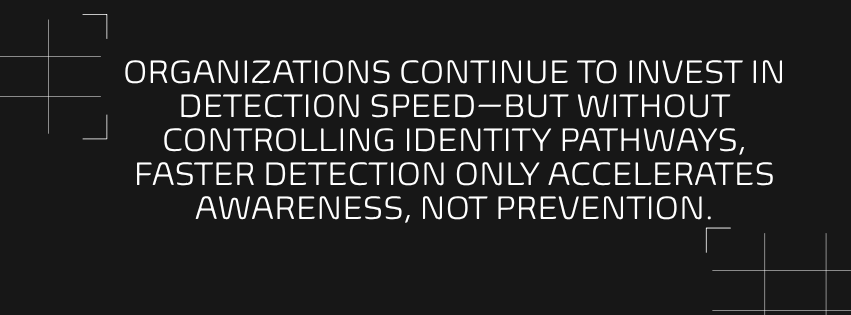
Real-World Use Case Scenarios
1. Smart Home Provider: Identity Compromise Becomes Enterprise Breach
Scenario:
A home security provider operates cloud-based monitoring, customer portals, and IoT device integrations. An employee is targeted via vishing, and attackers gain SSO access.
Impact:
Exposure of customer data (PII, addresses)
Potential mapping of physical locations tied to security systems
Increased downstream risk (targeted burglaries, social engineering campaigns)
Failure Point:
No real-time validation of identity risk across systems
No containment of access once credentials were compromised
How InfoSight Solves It:
Continuous monitoring of identity-based exposure across environments
Detection of anomalous access patterns tied to user behavior and privilege escalation
Rapid containment workflows (session termination, access isolation)
Quantification of exposure impact (which users, systems, and data drive risk concentration)
2. Healthcare System: Vendor Access Expands Attack Surface
Scenario:
A hospital relies on third-party vendors for EHR systems, IoMT devices, and remote support. A compromised vendor credential is used to access internal systems.
Impact:
Patient data exposure (HIPAA violation)
Operational disruption (EHR downtime, delayed care)
Regulatory and financial consequences
Failure Point:
Vendor access not segmented or continuously validated
No visibility into how identity risk propagates across systems
How InfoSight Solves It:
Enforces identity-aware segmentation across IT and IoMT environments
Monitors vendor access continuously—not just at login
Maps exposure pathways between vendor access and critical systems
Provides executive-level risk quantification tied to patient care impact
3. Financial Institution: Social Engineering Leads to Data Leakage
Scenario:
An employee in a financial institution is targeted with a sophisticated phishing or vishing attack. Credentials are used to access internal CRM and customer data systems.
Impact:
Exposure of sensitive financial data
Increased fraud risk
Reputational damage and regulatory scrutiny
Failure Point:
Over-reliance on MFA without contextual validation
Lack of continuous exposure monitoring post-authentication
How InfoSight Solves It:
Behavioral analytics layered on identity access
Detection of abnormal transaction patterns and access anomalies
Continuous risk scoring tied to financial exposure
Prioritization of remediation based on business impact
4. Manufacturing / OT Environment: IT Compromise Cascades to Operations
Scenario:
An attacker gains access to IT systems via identity compromise and pivots into OT environments controlling production systems.
Impact:
Production downtime
Safety risks
Supply chain disruption
Failure Point:
No segmentation between IT and OT identity access
Lack of visibility into how compromise in IT affects operational systems
How InfoSight Solves It:
OT/IT convergence visibility aligned to IEC 62443
Continuous monitoring of identity-driven access into OT zones
Risk prioritization based on operational impact
Real-time containment to prevent lateral movement
The Pattern: Detection Without Control
The ADT breach reinforces a consistent failure across industries:
Organizations detect threats faster
But do not control how access propagates across systems
And cannot measure exposure in business terms
Security programs remain fragmented—focused on alerts instead of exposure pathways.
InfoSight’s Approach: From Detection to Exposure Control
InfoSight addresses the gap exposed in incidents like ADT by shifting the model:
1. Continuous Threat Exposure Management
Identifies where risk exists across identities, systems, and data
Tracks how exposure evolves over time
2. Identity-Centric Security
Focuses on access pathways—not just endpoints or alerts
Detects and contains compromised identities in real time
3. Quantified Risk Intelligence
Translates technical vulnerabilities into financial and operational impact
Enables leadership to prioritize based on real business risk
4. Integrated Purple SOC
Combines offensive threat hunting with defensive monitoring
Uses AI to identify patterns while maintaining human validation and control
Strategic Takeaway
This breach was not about a failed security product.
It was about uncontrolled access in a highly connected environment.
As organizations continue to integrate cloud platforms, IoT systems, and third-party ecosystems, the attack surface is no longer defined by infrastructure—it is defined by who can access what, and how that access propagates.
Until that exposure is continuously measured, validated, and controlled, incidents like this will continue to scale—faster, wider, and with greater business impact.
Stay ahead of evolving threats with expert insights
Subscribe to our newsletter to keep you updated on the latest cybersecurity insights & resources.
One follow-up from a security expert—no spam, ever.